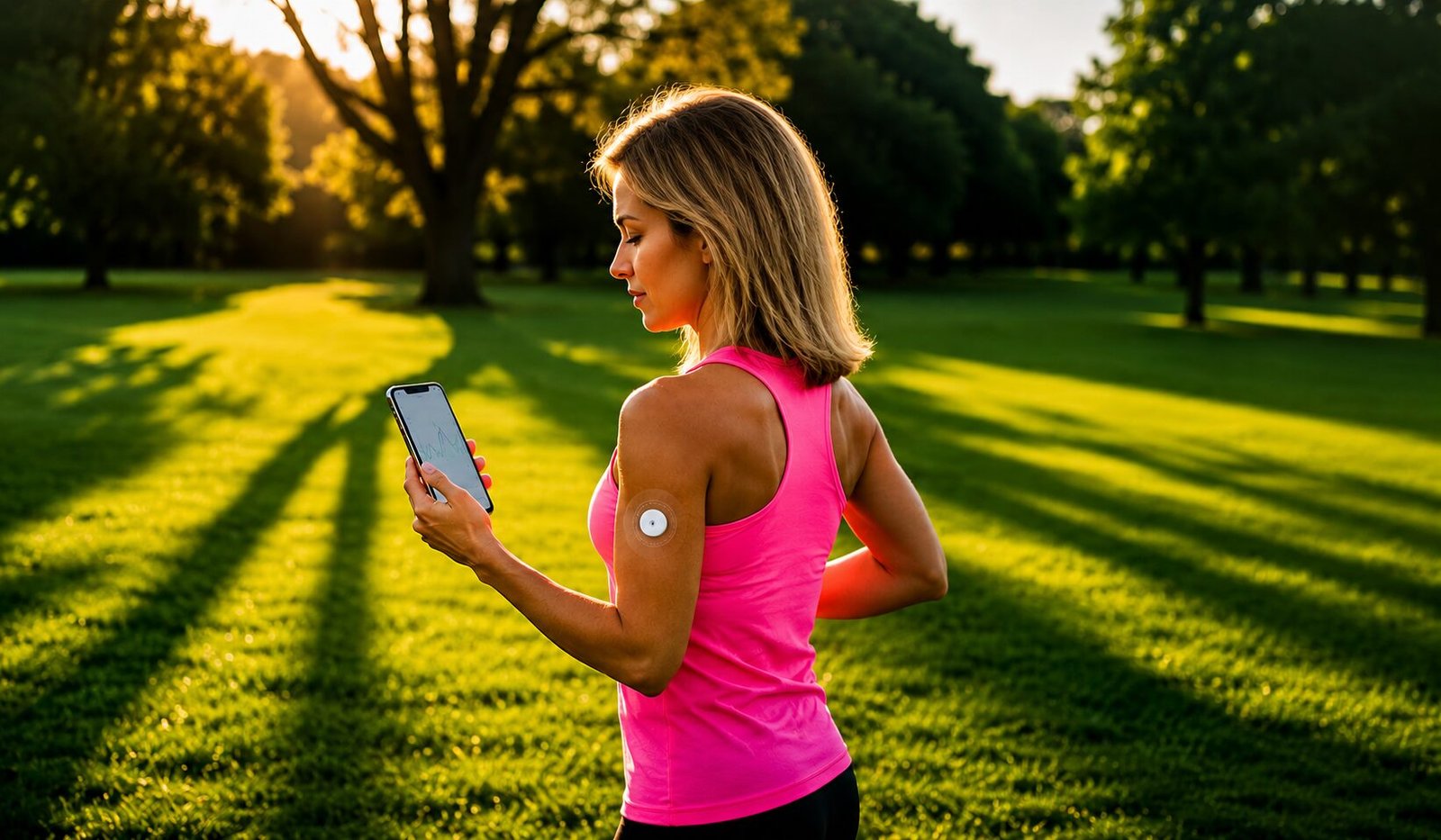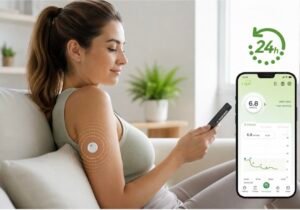
An arm glucose monitor is a modern solution for people who want to monitor their blood sugar levels continuously without interrupting daily activities. If you are looking for glucose sensors comparative information or simply want to understand what such a device looks like and how it works — in this article you will find answers to the main questions: what it is, how it is applied to the upper arm, who it is best suited for, and what you need to know before choosing.
What is an arm glucose monitor?
The traditional finger pricking method was the only way to find out blood sugar levels for many years. However, as technology advanced, continuous glucose monitoring (CGM) systems emerged — compact sensors that are attached to the upper arm and measure the glucose level in the interstitial fluid in real time. One such solution is the LinX CGM sensor, which can be purchased in the gliukozesmatuoklis.lt store.
Such a device is not a simple watch or bracelet — it is a medical device classified according to EU medical device requirements (Class IIb, CE mark). The sensor is attached to the upper part of the arm and measures glucose around the clock through a thin filament inserted under the skin, with data updated every minute.
How does a CGM sensor on the upper arm work?
The operating principle of the LinX CGM sensor is based on minimal invasion: an ultra-thin filament (sensor) is inserted into the skin of the upper arm, which comes into contact with the interstitial fluid and reacts to the glucose level in it. According to the manufacturer (MicroTech Medical), the sensor performs up to 1,440 measurements per day — which means that the readings are updated every minute.
Data is transmitted wirelessly to a smartphone. A special app allows you to see the glucose curve, trends, and receive alerts if the readings go out of the set range. One sensor lasts up to 15 days, and the device meets the IP68 protection standard — so rain or showers are not to be avoided.
- Up to 1,440 measurements per day (according to the manufacturer)
- Wear time — up to 15 days without replacement
- IP68 protection against water and moisture
- Readings are transmitted to a smartphone in real time
- Minimally invasive: a thin filament under the skin, without routine finger pricks
- CE mark according to EU medical device requirements (Class IIb)
On which arm and where exactly is the sensor attached?
The LinX CGM sensor is attached to the upper arm — usually the non-dominant arm. This location was not chosen by chance: the tissue of the upper arm is soft enough, the filament does not reach the muscles, and the device minimally interferes with movements during the day. The round body of the sensor is discreet — almost invisible under clothes, and does not get in the way during sports or travel while maintaining an active lifestyle.
Attachment is done in one motion — with a special applicator. The procedure takes a few seconds. After application, the sensor remains attached for up to 15 days, and purchasing an additional protective patch will ensure better protection of the sensor from peeling off during physical exertion.
Who is an arm glucose monitor best suited for?
A CGM sensor on the upper arm can be useful for people with very different needs. Here are the main groups that most often choose this monitoring method:
- People with type 1 or type 2 diabetes who want to continuously track glucose changes without routine finger pricks every time.
- People with prediabetes or those in risk groups aiming to notice changing trends earlier.
- Athletes and individuals leading an active lifestyle for whom it is important to understand how workouts affect their glucose level.
- Individuals controlling their weight or following a specific nutrition program and wanting to understand how food affects their body.
- Elderly people whose family members want to have an additional monitoring tool to ensure daily safety.
It is important to mention: a CGM sensor does not replace a traditional glucose meter and does not replace a consultation with a doctor, but it perfectly complements daily monitoring and helps to understand glucose change trends around the clock. If you want to try such a solution, you can choose a single sensor kit (15 days) or a more economical two-sensor package.
Convenience in daily routine: what you should know
One of the most frequently mentioned advantages is the ability to live actively without stopping activities for measurements. The sensor works while sleeping, playing sports, swimming, or working. The IP68 protection class means that the device is resistant to immersion in water up to 1 meter deep for up to 30 minutes, so a shower or pool is not a concern.
Another important aspect is data visualization. The app shows not only the instantaneous value, but also a curve of several hours or a day. This allows you to notice how glucose changes after a meal, after sleep, or physical exertion — a traditional glucose meter cannot provide such insights. If you want to explore what a glucose monitor without routine finger pricks looks like in daily practice, it is worth starting by trying out one sensor.
Price and where to buy
LinX CGM sensors are available in Lithuania through the gliukozesmatuoklis.lt store. Prices start from 39 € for one sensor (for 15 days of wear) and 78 € for a set of two sensors. This is one of the most affordable CGM technology prices on the market, allowing you to experience the convenience of continuous monitoring without making long-term financial commitments.
Sensors can be purchased directly online.
Frequently asked questions
Does applying an arm glucose monitor hurt?
Most users indicate that the insertion of the filament under the skin is done quickly and is minimally felt — the procedure takes a few seconds. The sensor is usually not felt during daily activities after application. Individual sensations may vary.
How long does one sensor work on the upper arm?
One LinX CGM sensor is designed to be worn for up to 15 days without replacement. According to the manufacturer (MicroTech Medical), up to 1,440 measurements per day are performed during that period.
Can I bathe and play sports with the sensor on my arm?
Yes. The LinX CGM sensor meets the IP68 protection standard, so it is resistant to moisture and short-term immersion in water. Sports, showers, or rainy weather do not pose obstacles to using the sensor. When sweating heavily, it is advisable to use a protective patch.
Does a CGM sensor on the upper arm replace a traditional glucose monitor?
No — a CGM sensor does not replace a traditional glucose monitor, but it complements it perfectly. In case of doubt about the readings or in a clinical situation, it is recommended to additionally measure glucose from the finger with a classic glucose monitor and consult a doctor.
Who is this technology for and is a prescription required?
The LinX CGM sensor is a device that complies with EU medical device requirements (CE mark, Class IIb), intended for children from 2 years of age and adults who want to monitor their glucose level. In Lithuania, the sensors are sold without a prescription, but before starting to use them, it is always recommended to consult a doctor, especially if you have diabetes or are taking medication.
Medical device. Read the instructions for use before use. This information is for educational purposes only and does not replace a consultation with a doctor or pharmacist. In case of doubt about the readings, measure glucose from the finger. Individual results may vary.